
This safe work instruction outlines the safe operation of fuel and lube trucks used on a construction work site, this standard method must be followed by all fuel and lube truck drivers working on project work sites.
Overall project manager is having responsibilities for the implementation of this standard safety procedure.
General Requirements
Fuel & lube truck drivers must have valid driver’s license & authorization for light trucks.
They must also complete training and assessment and be issued with Third Party Certificate of competency prior to operating the lube trucks in a construction project site area.
Pre Start walk around Inspection
Check all fluid levels including fuel, hydraulic, brake and oil.
Also check radiator for loose bolts and any leaks, bolts to be tightened and leaks must be rectified as applicable.
If the engine is hot, do not loosen the radiator cap to check the coolant level as it can cause serious injury. (Under Pressure) Preferably release button cap to be used.
Inspect the engine compartment for any kind of apparent oil coolant and fuel leaks.
Clean and check all lights and make sure that there are no broken bulbs or bad wires.
Check cabin for broken windows or other damage to the driver’s cabin.
Position yourself in the operator’s seat and make adjustment to be in a comfortable position while operating fuel truck/machine.
Check fire extinguisher is available and having valid certificates etc.
Clean and adjust all mirrors.
Keep operator’s compartment clean and clear of debris.
Sign of daily pre use check list.
Is the lock at Facility “Mechanism” available.
Starting the Fuel and Lube Truck
Fasten the seat belt.
Make sure all control levers are in neutral.
Make sure park brake is set.
Give blast of the horn before engine start up
Turn the start switch key to on.
Check all gauges and warning lights as engine warms at idle.
Orange flashing/revolving light fitted on the truck should be turned on.
General Safety Precautions
Operators should never smoke around their vehicle.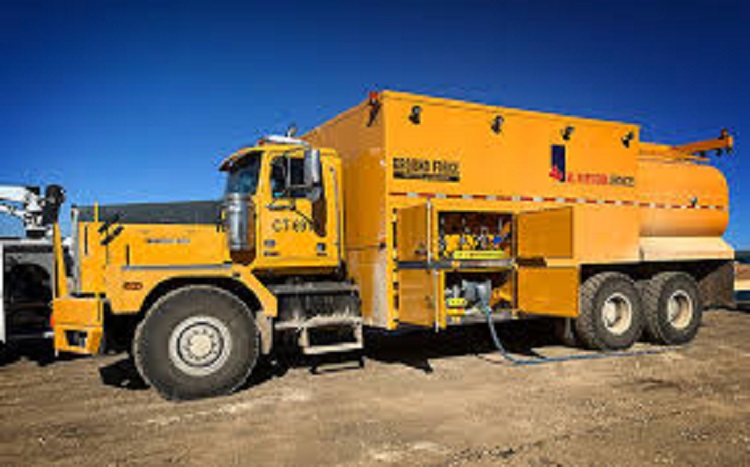
Vehicles should have “NO SMOKING/ NO OPEN FLAME” No signage posted.
All vehicles being serviced should have engines shut off and locked out.
Wheel chocks or park brake on flat ground must be used when parking vehicle and leaving the cabin unattended.
Keys to be removed from ignition.
Wheel chocks and park brake must be used where the ground gradient exceeds 5 degrees.
Welding or cutting is not allowed whilst servicing the fuel and lube vehicles.
Operator should wear the PPE required for the site as well as safety glasses when servicing the lube trucks.
Operator will NOT fuel or service equipment if the equipment operator remains on the equipment and the unit is not switched off.
Spill kits / Environmental kits to be available in the area of servicing the fuel trucks.
In Field Servicing Procedure for Fuel Trucks
When approaching vehicle to be serviced, the serviceman should get the attention of the operator of equipment by sounding the horn, parking where visible, calling on radio or making ground visual contact.
After the equipment operator acknowledges the serviceman’s presence, he should finish his immediate job and move his vehicle to a safe area.
The safe area should be as flat as possible and out of traffic.
When the equipment has been moved to the safe area, and the engine stopped, the operator will not dismount until the service truck is parked alongside and has applied the park brake.
If the fuel truck is servicing alone it should pull up along side of the equipment, but if working in conjunction with the lube truck it may pull up behind the equipment after the lube truck is along side.
If the equipment to be serviced is rubber tired, the equipment operator should place wheel chocks behind the wheels.
Equipment with blades should lower the blades instead of using chocks.
All fuel receptacles should be cleaned before fueling.
When servicing a shovel the bucket should be on the ground.
Before servicing commences the serviceman will attach a sign at the access point to the cabin, “Equipment being serviced – No Entry.”
On completion of the refueling and lube operation, the serviceman will ensure that all personnel are clear of the equipment before removing the no entry sign.
The equipment operator may then access the cabin.
Safe Use of Fuel System
Fuel system maintenance
No Smoking / No open flame signage is displayed.
Make certain valve at tank is open.
Make certain valve at pump station is open.
Reset counter to 0.
Clean around fuel receptacle or tank before removing dust covers.
Remove dust cover and wipe off nozzle.
Install nozzle on to tank by pulling top over towards you.
Insert nozzle over receptacle, push firmly and release lever.
Pull “T” handle level and move “T” handle up.
Turn on switch on to “Auto” and depress red light button.
Fueling will start.
When unit is full, pump will automatically shut off.
Record amount of fuel on log.
Emergency Procedure
Turn off electric power at pump house (pull lever down).
Turn off valve behind pump house.
Turn off valve at storage tanks.
Contact supervisor immediately.
Fire fighting Procedure
Attempt to extinguish fire.
If unsuccessful or fire is out of control, proceed emergency shut down.
Do not risk injury to you or anyone else.
Records
Relevant Inspection Checklists and Logs